
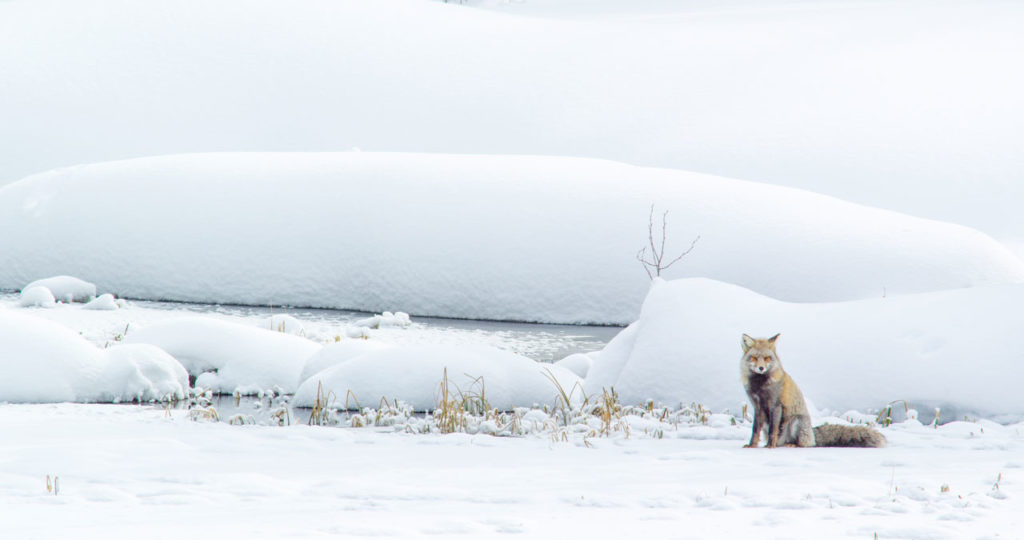
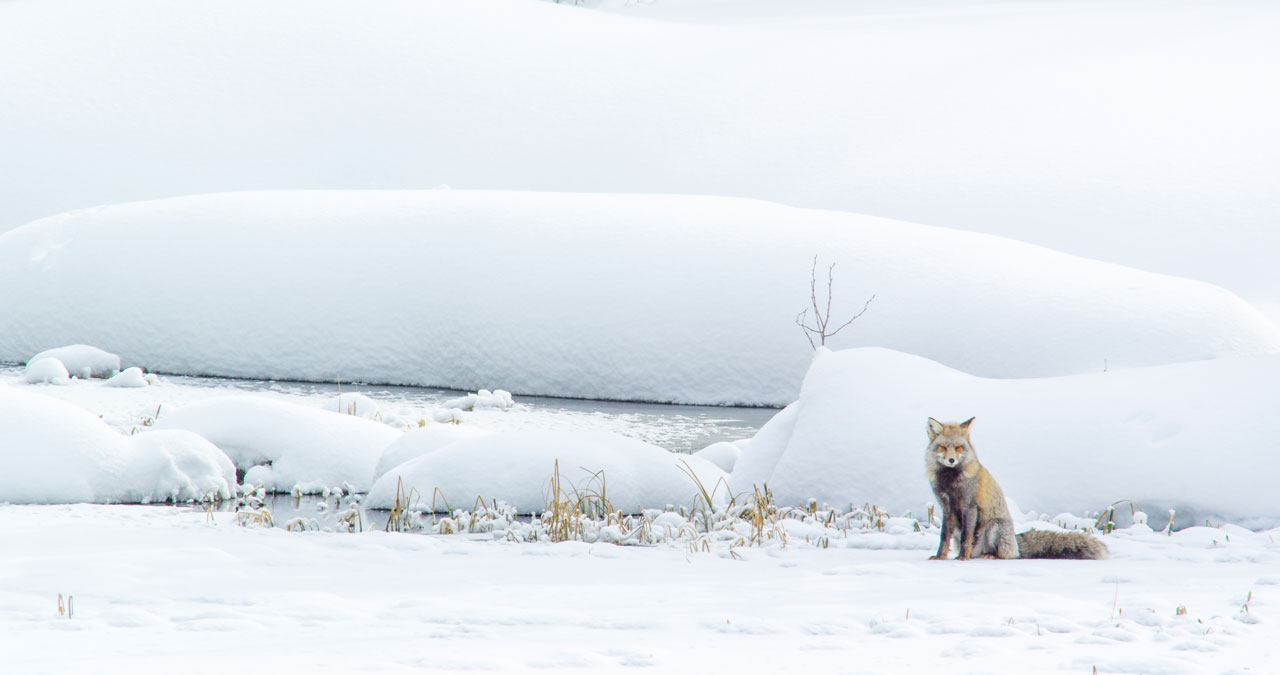
A red fox in Grand Teton National Park. This particular animal has a melanistic color pattern. Red foxes, including those in the Jackson area, can be the standard red color, completely black, and anything in between. This one displays a partial melanism, meaning its not completely red and not completely dark, or melanistic. Photo by Ryan Sheets.
Cold temperatures and snow have arrived in Grand Teton. The park’s wildlife is either settling into their winter dens or preparing for the long, cold season ahead. As always, please be mindful of wildlife and give them plenty of space while viewing them in their natural habitat.
• Fall spawning mountain whitefish are headed to winter habitats as their eggs incubate for the next several months.
• Fish energy needs and activity diminish as the water temperature drops and they settle into their winter habitats.
• The bighorn sheep rutting period has begun.
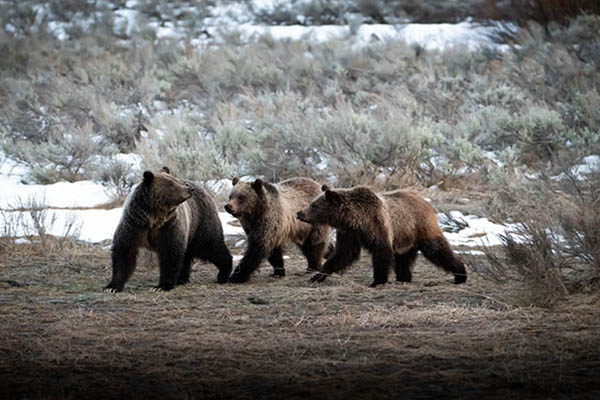
• Most black bears entered winter dens by the end of October, with most grizzly bears doing the same during the month of November. A small number of grizzly bears have learned how to put on additional fat during late fall/early winter and will remain out and about for up to another month.
• All hibernating small mammals that were active in October, such as chipmunks, have begun hibernating.
• Rough-legged hawks, which are often prominent on fence posts and power poles, returned to the valley from Arctic nesting grounds for the winter. Migrations of trumpeter and tundra swans brought higher numbers of swans to the valley.
• Many of the mule deer that undertake long distance migrations have left the park and are en route or have already arrived on their winter ranges. Because of the relatively mild weather and low snow levels this fall, mule deer that migrate shorter distances have yet to begin their migrations.
• Most pronghorn have left the Jackson Hole valley, bound for winter ranges south of Pinedale in the Green River Basin. Typically a few remain this time of year on the National Elk Refuge.
• Adult bald eagles with nesting territories in the park remain year-round and will prey on higher numbers of waterfowl as fish become less available under ice.
• Long-tailed weasels and snowshoe hares have recently turned from their brown summer coats to winter’s white fur.
• Beaver activity is strongly influenced by ice conditions as they continue to stash willow and other cuttings under the ice for a long winter’s food supply.
• Wolf pups that have been largely confined to den and rendezvous sites since birth are now traveling with the rest of the pack throughout their home ranges, learning to hunt and how to survive in the wild.