

As of Thursday, February 19, the Snake River Headwaters snow water equivalent is at 93% of median, compared to 111% in 2025 and 90% in 2024 on the same date. Snow is just one of the challenges that makes late winter to early spring a critical time of year for many wildlife species. Fat reserves are at their lowest, yet spring’s green-up is still weeks away. Every unnecessary movement costs precious energy. Please help wildlife conserve energy by maintaining respectful distances and ensuring your presence never alters their behavior.
Bull moose have shed their antlers by late February. To distinguish males from females during this time of year, look for the antler attachment points (pedicles) on males or the white fringed area around the tail of females.
Wolves have finished breeding. Like domestic dogs, their gestation period is approximately 63 days. Pups will be born in mid- to late April but will not emerge from dens until May.
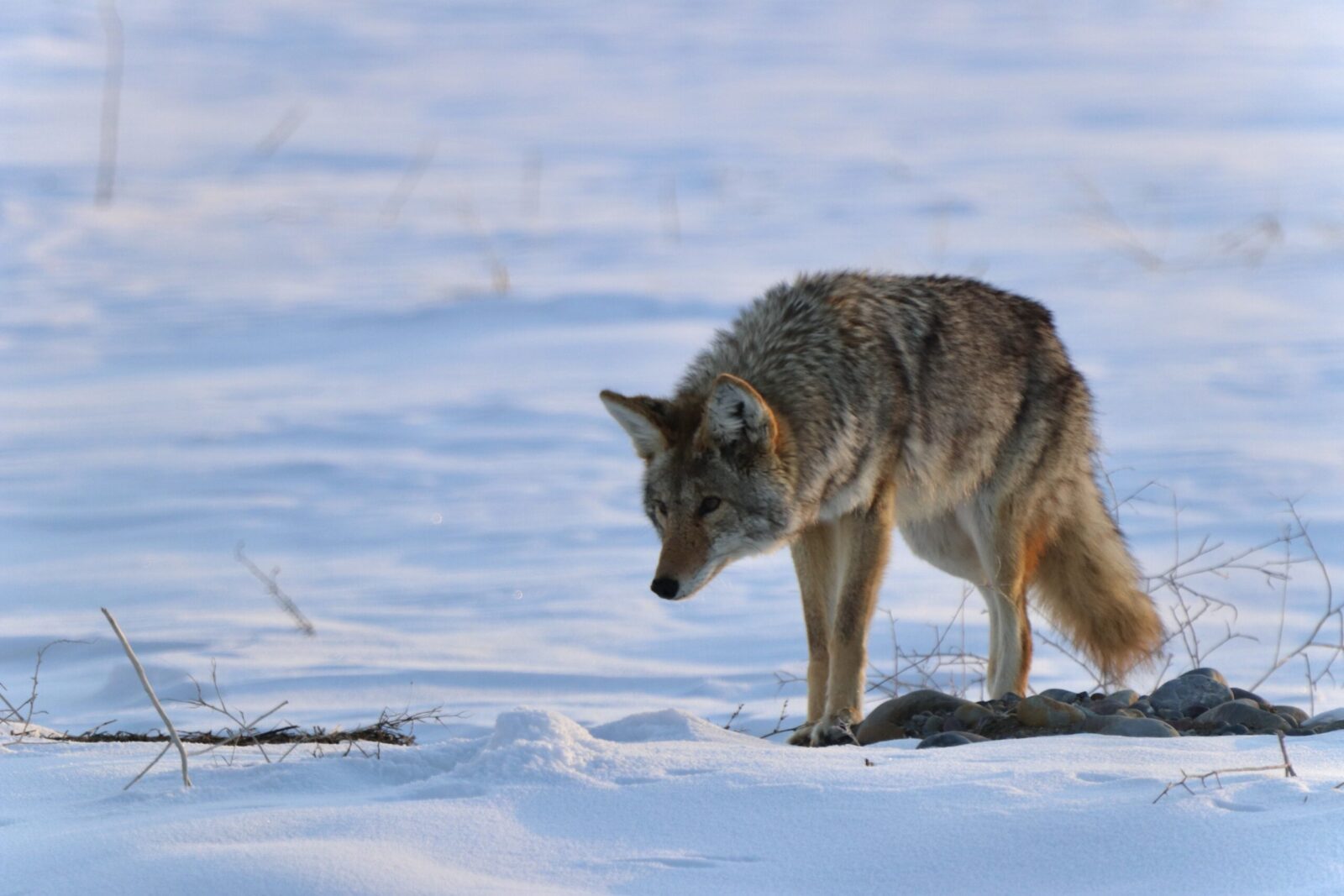
Foxes & Coyotes hunt rodents traveling beneath the insulating snow in the subnivean zone. (This is the zone where small mammals live during winter, creating connecting tunnels for travel and foraging. When the snow is 6 inches deep or more, the subnivean zone maintains a temperature at ground level of about 32˚F, regardless of the air temperature above the snow.) Using keen hearing, foxes and coyotes pinpoint prey by sound before launching into a high, arching pounce and diving nose-first into the snow. They are remarkably successful using this technique.
Long-tailed Weasels are “crust cruisers” leaving zigzagging, dumbbell-shaped tracks across the snow’s surface and small plunge holes where they dive into the subnivean world to pursue prey.
River Otters remain active all winter, using holes in the ice to travel between land and water. Their dense two-layer fur is essentially waterproof, providing exceptional insulation in frigid water, and a clear second eyelid makes underwater vision easier even in the cold. With webbed feet, short legs, and streamlined bodies, they are powerful swimmers. Their playful belly slides across the ice are both efficient and entertaining.
Greater Sage-Grouse in the valley’s small, isolated population survives winter by feeding on exposed sagebrush leaves. February typically brings peak snow depths, concentrating birds for annual trend counts. However, lower snow levels this winter may disperse the birds too widely for an accurate count. The silver lining: delayed deep snow means more abundant forage.
Mule Deer that summer in Grand Teton spend winter on seasonal ranges. Many migrate long distances to avoid the harsh winter conditions in Jackson Hole traveling northeast toward Cody along the Shoshone River; east to Dubois and Crowheart; west to Idaho’s Teton Canyon and Sand Creek Desert; or south toward Pinedale, Farson, and Rock Springs. Resident deer remain closer to home, seeking south-facing slopes where sunlight melts snow around tree bases. These deer move carefully from “tree well” to “tree well,” browsing on exposed vegetation.
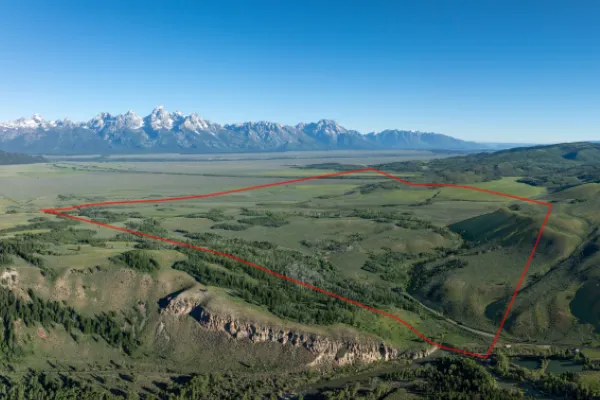
Elk usually migrate to the National Elk Refuge to spend their winter, but the lower snow depths this winter have allowed them to travel back and forth into southern areas of the park to take advantage of exposed foods. One of the areas where they are foraging is the newly acquired Kelly parcel. If conditions continue to be favorable, this will be the first winter since 2018 that the Refuge has not used supplemental feed.
Early Nesters like ravens, bald eagles, and great-horned owls have begun courtship. Great-horned owls’ resonant hoots carry especially well on crisp winter nights when bare branches and cold air allow sound to travel farther.
Winter leaves wildlife with little margin for survival. Animals may appear calm or unconcerned when approached, but often simply have nowhere else to go until snow depths decrease. Your distance matters and your restraint can help wildlife survive until spring.