.avif)

March Wildlife Whereabouts: Spring Conditions Still Challenge Wildlife
Spring poses significant challenges for wildlife as they contend with depleted winter fat reserves and limited availability of new plant growth, which is often in its earliest stages and sparsely distributed. Consequently, conserving energy remains a critical priority during this transitional period.
● As of March 17, the Snake River Headwaters is recording snow water equivalents at 108% of median, compared to 101% in 2024, 117% in 2023, and 79% in 2022 for the same day.
● The snows that came during late February prompted bison to move south in the park for better forage opportunities. Traditionally, bison move from Elk Ranch Flats to Antelope Flats as snow cover deepens and decreases their ability to sweep aside the snow to access food. They often use plowed road corridors as travel routes instead of expending energy wading through deep snow. This creates a substantial road hazard.
● The first grizzly bear sighting of the year in Grand Teton/John D. Rockefeller, Jr. Memorial Parkway is was observed on 3/19/2025 at Flagg Ranch. The first sign of grizzly activity observed in Yellowstone this year were tracks found in the northern part of the park on March 9. Adult male bears are the first out of their dens, with more than half out and about by the end of March. Bears with new cubs are usually the last to emerge from their dens in late April or early May. It is important to start carrying bear spray during spring explorations, make noise, and be alert to your surroundings.
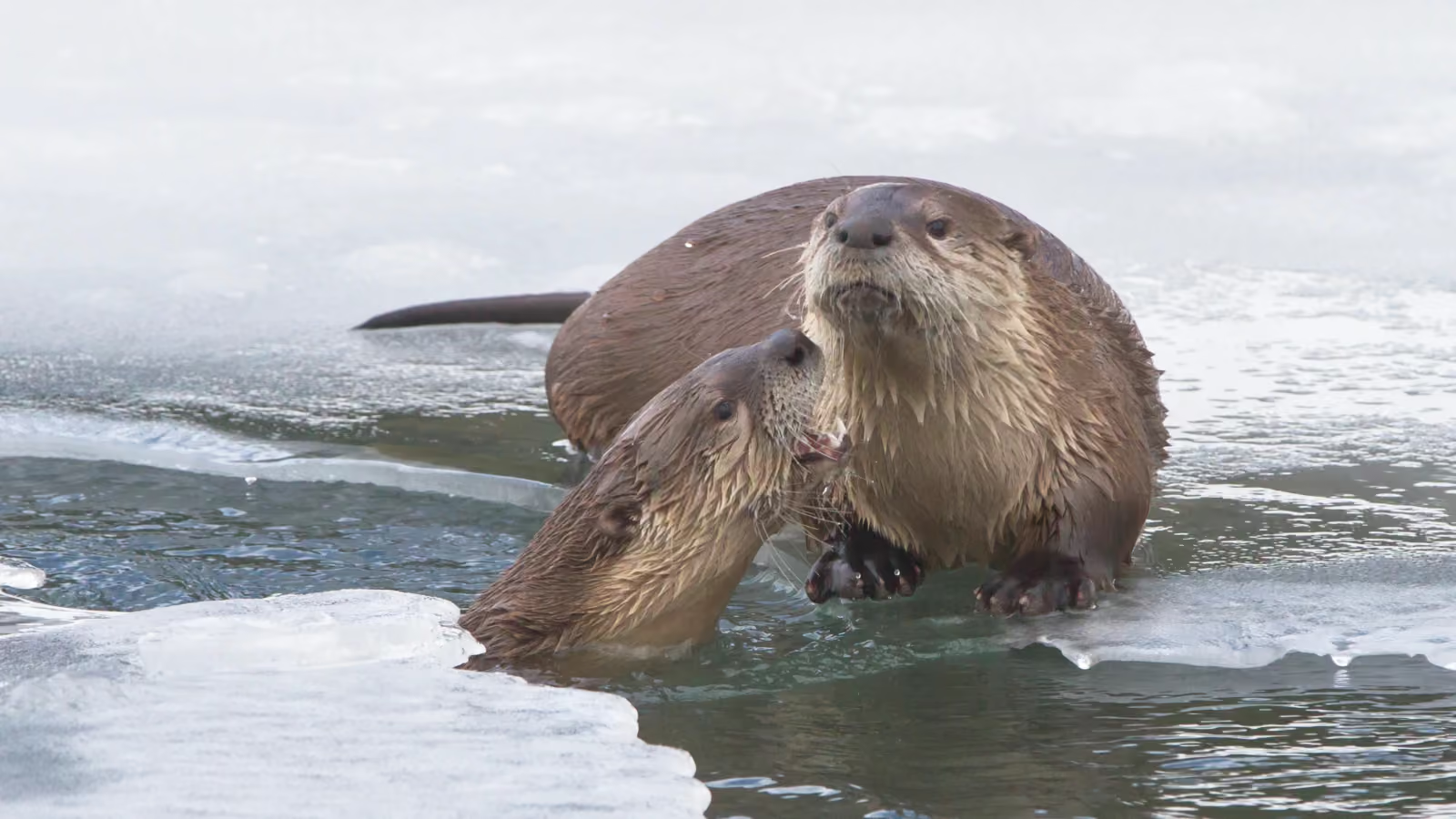
● As the snowpack recedes on the valley floor and rivers start opening up, some bald eagles are already sitting on their nests. Many other wildlife species including ravens, river otters, golden eagles, great-horned owls, and Canada geese have begun their courtship and breeding activities.
● The first migrating birds of the season will soon arrive, including western bluebirds, red wing blackbirds, red-tailed hawks, northern flickers, and robins. Next to follow will be sandhill cranes, osprey, and other migratory birds.
● Grazers like elk, mule deer, and bighorn move to areas melted free from snow to forage on exposed, dried vegetation until new greens start to sprout.
● Elk have wintered in typical areas this year, but elk on the refuge will start to drift north as they follow the receding snow and vegetation green-up. Bull (male) elk grow a new set of antlers annually. Decreased daylight lowers testosterone, which causes the connection between the antler and skull to weaken and the antlers to fall off. Elk generally shed their antlers between March and April and begin to grow a new set shortly thereafter. Larger bulls drop their antlers earlier than smaller bulls, especially spikes (yearling bulls) who may retain their antlers into May. Antler collection in the park is illegal as the shed antlers are an important source of nutrients for rodents like mice, chipmunks, squirrels, as well as porcupines and other animals that gnaw on shed antlers.
● Wolverines produce 1-2 kits that are born from mid-February through March. Females dig dens in high, remote alpine basins where the snowpack persists late into the spring. She raises the kits alone and stashes them when she goes out on forays for food. If undisturbed, the female and kits may use the natal den until May. Wolverines are primarily scavengers, depending almost exclusively on carrion in winter and early spring.
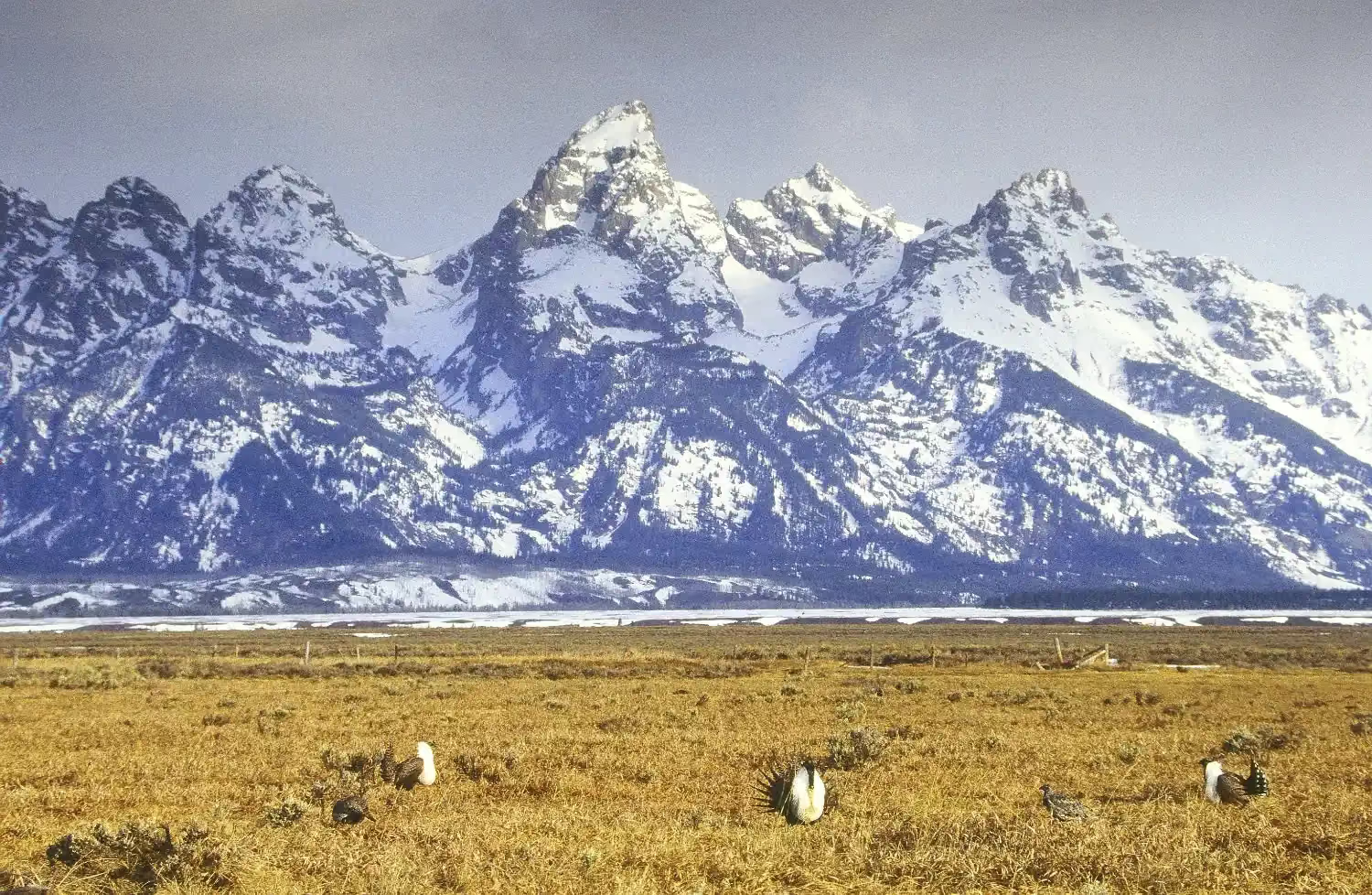
● Male greater sage-grouse will begin strutting on open areas of the sagebrush called leks to attract a mate in late March or early April. At dawn, the males puff their chests and fan their starburst tails to strut. They inflate bulbous yellow air sacs and thrust with their heads to produce weird pops and whistles. In preparation for this display, male greater sage-grouse can gulp and hold a gallon of air in a pouch of their esophagus. By squeezing it out with force, they begin their display. Over the harsh winter, sage-grouse gain weight and strength in preparation for the breeding season by feeding on sagebrush leaves. They get water from feeding on snow.

Spring is a great time to observe wildlife as they are often confined to lower elevations due to the remaining snow. Do not approach them closely even though they may appear unconcerned by people as they focus intently on foraging. Please remember that spring is still a harsh season for wildlife, and many have depleted their fat reserves. Be considerate and keep your distance, allowing them to concentrate onconsuming vital calories.
EXPLORE MORE STORIES: