.avif)

2026 July Wildlife Whereabouts: Bison Calves, Mosquitoes, and Summer Heat
The warm days of midsummer are here. As temperatures rise, many animals reduce their activity during the hottest part of the day. For the best chance to see wildlife, plan to explore in the early morning or late afternoon until cooler weather returns in early fall.
Mosquitoes continue to be out in force due to the recent rain, though their abundance varies across the landscape. They provide food for birds, bats, fish, and other species.
Neotropical migratory birds, such as ruby crowned kinglets, western tanagers, and hummingbirds are busy nesting and raising young.
Osprey, Bald eagle, and trumpeter swan nestlings continue to develop and prepare for their first flights later this summer. Watch for fledglings throughout August.
Hibernating rodents, such as Uinta ground squirrels and marmots are very active, working hard to build fat reserves in preparation for winter, while chipmunks are storing food in their burrows to eat when they wake after periods of sleep called torpor. Chipmunks may not hibernate fully, but their bodies go through physiological changes to survive winter. When they enter torpor, their body temperature, heart rate, and respiration rate drop significantly. Torpor is a deep sleep; however, the chipmunk wakes periodically and eats before going to sleep again.
Pikas, smaller relatives of hares and rabbits, are becoming easier to spot as snow melts from higher elevations. They dart about gathering vegetation in piles known as haystacks to feed from in winter months.
Bison calves born earlier this spring are replacing their bright orange natal fur with a dark brown coat. The bison are gathering in larger herds for the rut which begins in late July and lasts through August. Exercise greater caution around bison during this breeding period.
Moose have calved and are very protective of their young. Please be cautious no matter where you're viewing them.
Pronghorn fawns, born in June, are growing stronger. By late July, both pronghorn and elk calves are very mobile and move with their mothers for most of the day.
Grizzly bears with cubs were observed in the northern reaches of the park from mid-May through late June. If you are lucky enough to see them, please give them the space they need.
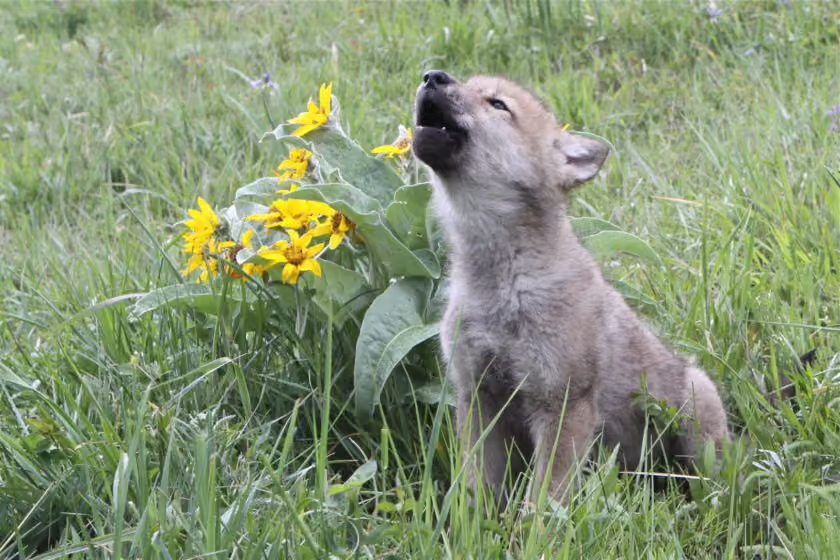
Wolf pups from successfully reproducing packs are becoming more visible as they explore their surroundings, play, and grow rapidly.
While summer is a time of abundant food and favorable weather, it is also a time of great pressure on wildlife as thousands of visitors arrive in the park each day. Visitors play an important role in helping wildlife thrive by giving animals the space they need to feed, rest, and care for their young. Remember, park regulations require that visitors stay a minimum of 100 yards away from bears and wolves and 25 yards from all other wildlife.
EXPLORE MORE STORIES:
.jpg)