.avif)

January Wildlife Whereabouts: Animals Adapt to Survive Harsh Conditions

Wildlife that remain in Grand Teton National Park through the winter rely on remarkable adaptations to
survive cold temperatures, deep snow, and limited food availability during this challenging season.
Moose use their long legs to move through deep snow to areas of preferred forage. Calves remain with their mothers through the winter following behind them take advantage of the trail broken by the adult. Moose rely on their highly developed sense of smell to locate the most nutritious parts of shrubs beneath the snow. Many congregate on the sagebrush flats near the Jackson Hole Airport, where bitterbrush, a favored winter food, is abundant.
Bison use their massive heads and powerful necks to sweep snow aside and expose buried forage. Their skin thickens in response to cold temperatures, and their dense winter coat insulates them. The curly fur on their heads protects them while foraging in deep snow and when winter winds blow. Bison often face directly into storms, hunkering down protected by their coat and low profile.
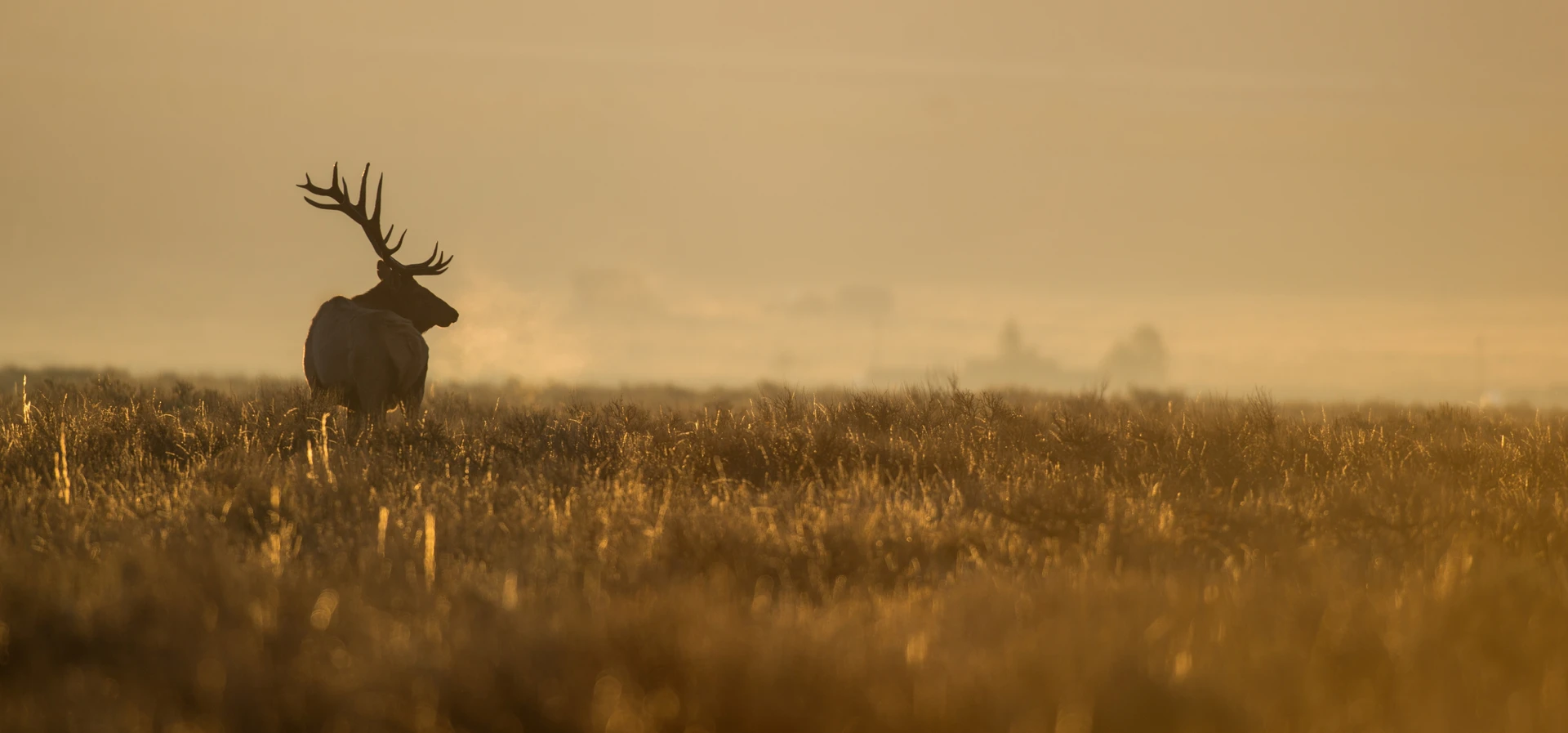
Elk migrate away from areas of deep snow. When the snow is shallow, elk can paw or scrape it aside with their hooves to access buried grasses. As snow accumulates, their diet shifts to more woody shrubs, tree bark, and twigs that remain exposed. Most of the elk herd typically spends winter on the National Elk Refuge. However, in early January, unusually low snow depths allowed some elk that had moved onto the refuge to spread back north into the park to take advantage of exposed forage. While less common, a similar movement pattern was observed during the winter of 2018.
Wolverines are superbly adapted to winter travel, with broad feet that function like snowshoes and long guard hairs that shed frost easily. They possess an upper back molar that is uniquely rotated 90 degrees, towards the inside of the mouth. This molar combined with powerful jaws and large neck muscles allows wolverines to crush bones and tear off meat from prey or carrion that has been frozen solid.
The American dipper, also known as the water ouzel, remains active all winter, seeking areas of open, moving water where they bob on rocks between dives for aquatic insects.
Cold-water fish are adapted to survive winter, often under the ice for months at a time. They move into deeper pools with slower currents and their metabolism decreases. Even so, winter is a stressful time, and sport fishing opportunities in the park are limited to reduce additional strain on fish populations.
Teton Range bighorn sheep retreat to small, high-elevation ridges blow free of snow. Conserving movement is a strategy they use to conserve energy. Bighorns may lose 20-35 percent of their body
weight over the winter.
Wolves breed in February, making January a time of change within packs. Some wolves leave their natal packs in search of a mate and may go on to form new packs of their own.
Please consider the space and energy conservation needs of wildlife during winter and don't approach animals, even if they appear unconcerned. In many cases, they have nowhere else to go until snow depths decrease. Added stress or movement can lead to their demise.
Obey winter wildlife closures and avoid travel or stick to designated routes in the voluntary bighorn winter zones. Both are designed to protect ungulates during this critical season. Information about closures and voluntary bighorn sheep winter zones can be found here:
Temporary & Wildlife Closures - Grand Teton National Park
EXPLORE MORE STORIES: