.avif)

Twenty Summers on the Trail: Looking Back at YCP 2026
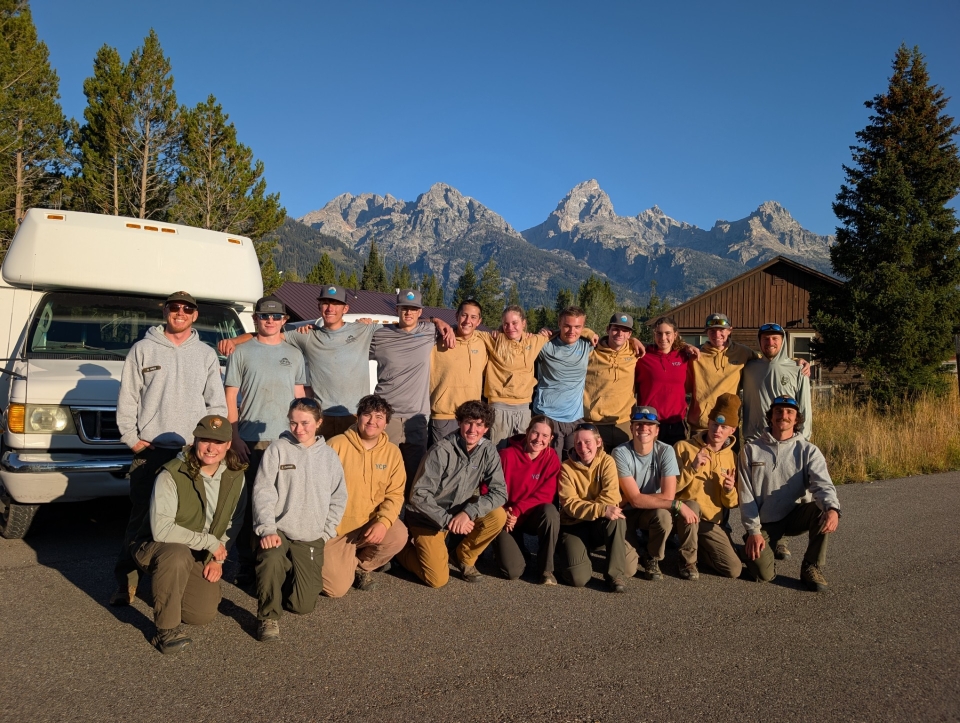
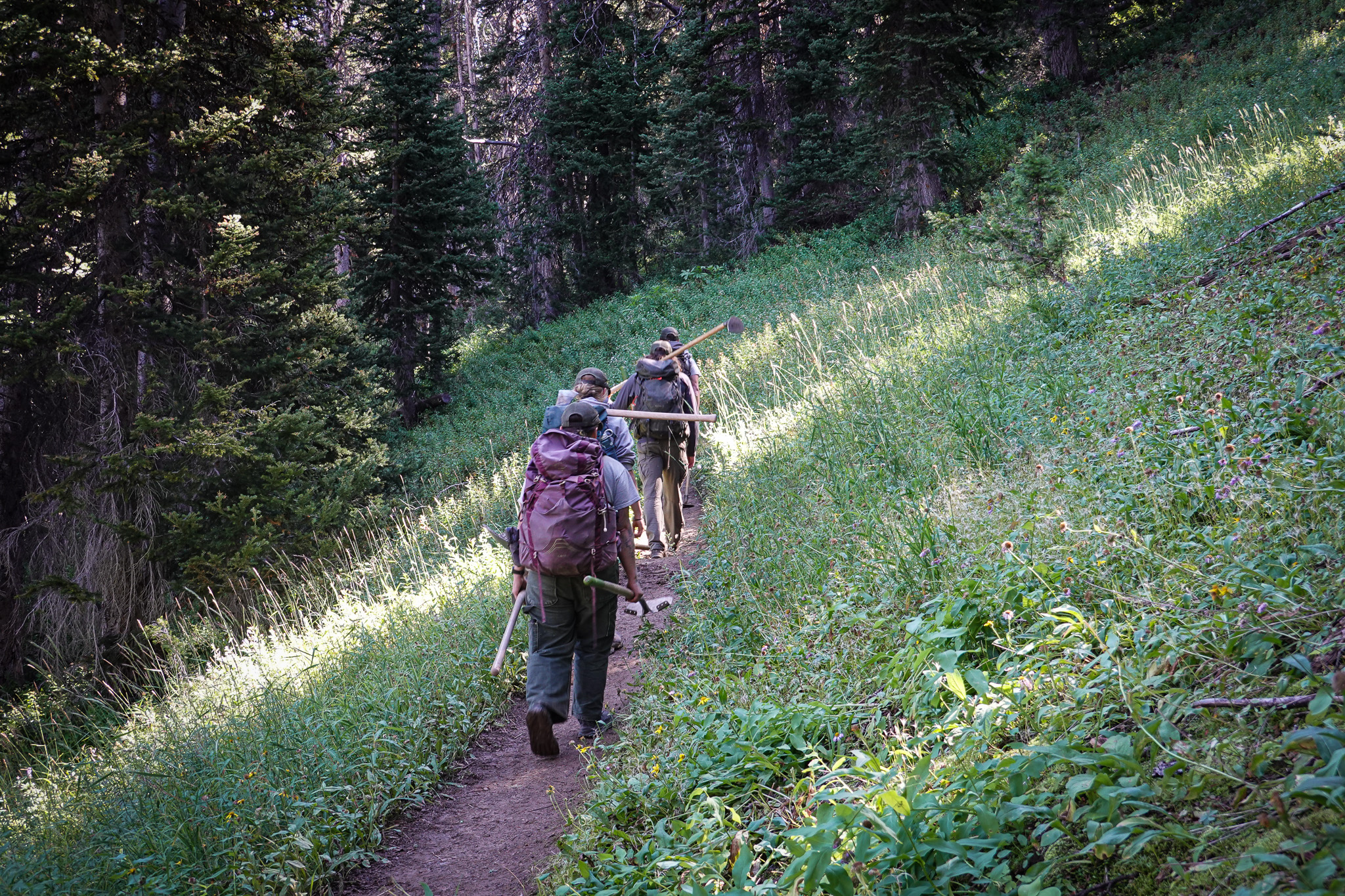
Each June, a group of sixteen-to -nineteen-year-olds spends ten weeks in Grand Teton National Park, working alongside park staff and helping maintain the 350 miles of trails. Trail projects, educational clinics, and exposure to a range of National Park Service careers all factor into the experience. This year carried extra significance as it marked the twentieth summer of the Youth Conservation Program. If the last two decades are any indication, the program continues to shape participants' paths, turning teenagers into trail builders, and trail builders into the next generation of public land stewards.
[pullquote]
I know for certain the youth I have mentored over the years have changed my life for the better. They continue to inspire me more and more every summer.
| Alex Lennon
| NPS YCP Leader and Supervisor
[/pullquote]
The 2026 crew arrived on June 15 and spent the summer leaving their mark on nearly every corner of Grand Teton. By the time they packed up their tools in late August, they'd rebuilt bridges, installed bear boxes, cleared historic cabins of invasive weeds, and hammered dozens of check steps into a burn area still working its way back to a forest. Along the way, they also picked up a real education in what it takes to care for public land, and what it might look like to build a career around doing exactly that.
On the Trail
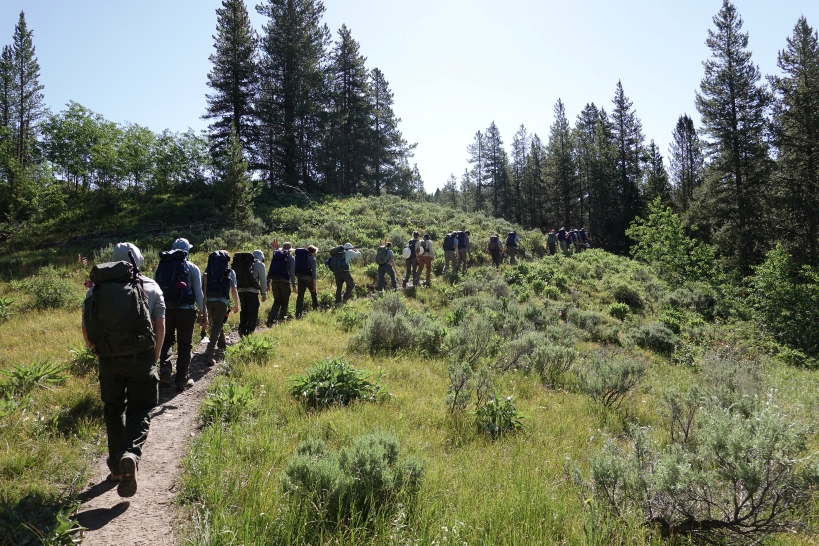
Much of the season's work centered on one project: a full rebuild of the Leigh Lake outlet bridge's approaches and abutments, the timber structures that had been quietly deteriorating for years. The crew harvested more than thirty logs, peeled them by hand, tore the old structure apart, and built the new one from the ground up, a project substantial enough to anchor several weeks of the summer.
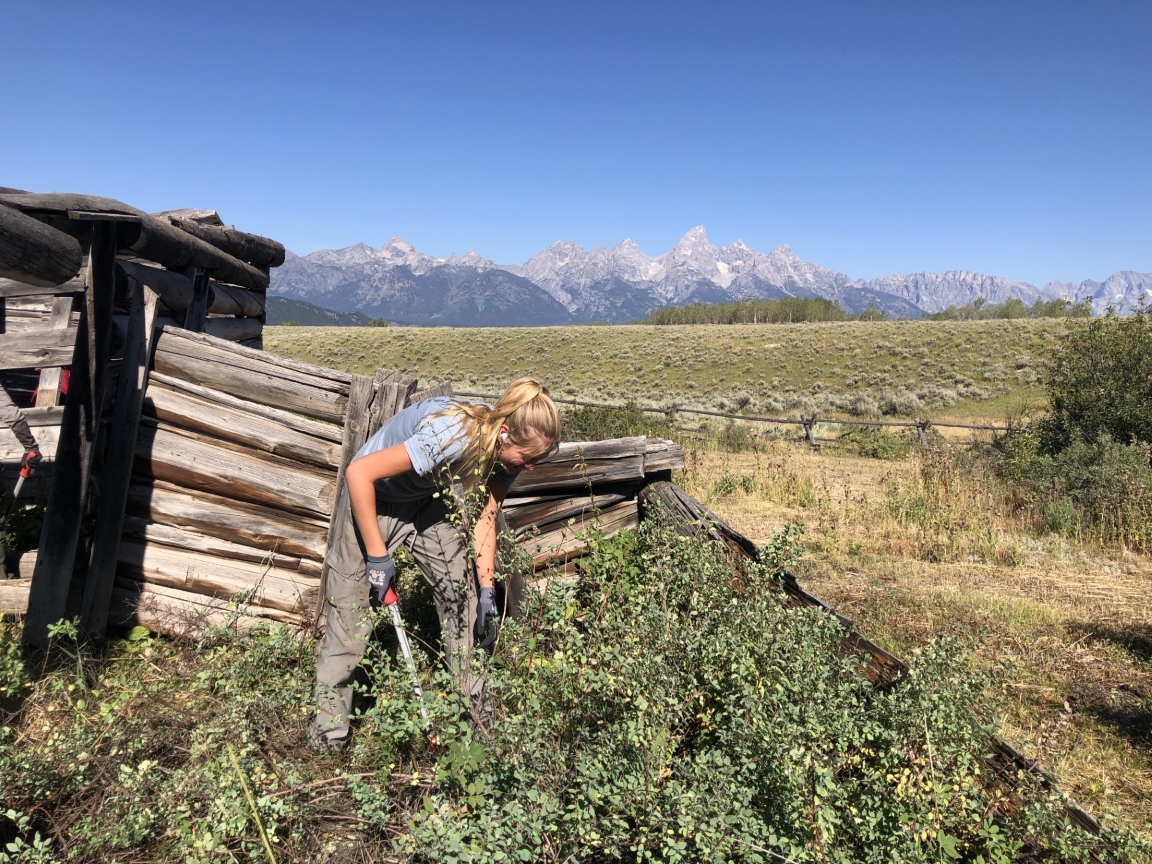
Everywhere else, the work was defined by variety. Early in the season, the crew installed fourteen new bear boxes at Colter Bay and Jenny Lake, a project that involved nearly every skill in the trail-building toolkit, from digging support holes to pouring concrete. They rehabbed worn social trails near Taggart Lake and Garnet Canyon, restored drainage along long-neglected stretches of the Valley Trail, and started a new log causeway at Grandview Point to replace a rotting, hazardous crossing. The season's biggest test came during the annual backcountry hitch, when a last-minute pivot to car camping along Grassy Lake Road didn't stop the crew from installing fifty-three log check steps through a badly rutted stretch of the 2016 Berry Fire burn area, using downed timber from the fire itself as material. The final weeks brought a different kind of trail work altogether, as the crew partnered with the park's historic preservation staff to clear invasive weeds from the century-old Luther Taylor cabins, work that will let renovation there move forward.
Threaded through all of it was a growing awareness of accessibility on trails. A early-season visit from Joe Stone, an adaptive athlete and trail consultant with Unified Dirt, showed participants firsthand how mobility devices navigate a trail. The lesson stuck: crews continued flagging small obstacles as they completed trail work across the park, adjusting easy to fix but often overlooked sections that previously prevented trails from being accessible to more visitors.
Learning Beyond the Trail
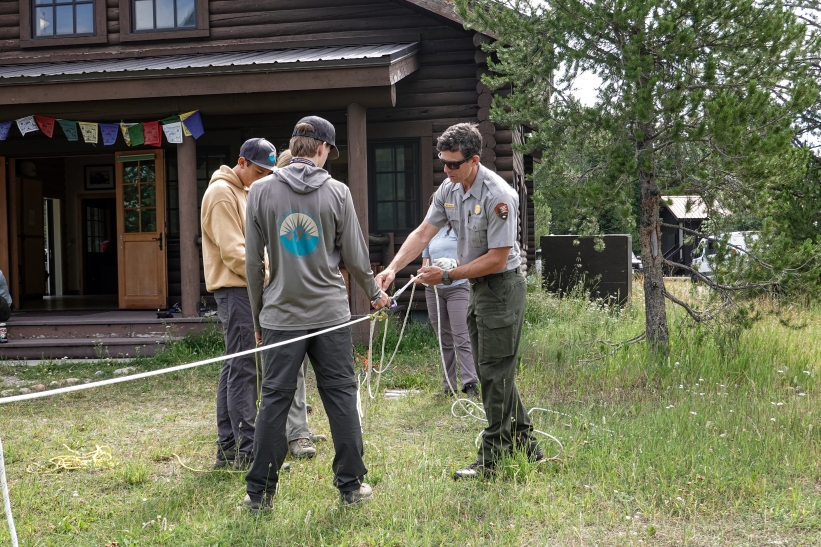
Before anyone picked up a shovel, the crew spent their first week preparing physically and mentally. Elizabeth Koutrelakos, a former YCP leader turned therapist, opened the season with a conversation about mental health, nutrition, and working as a team. From there, the program moved into its annual WTEWilderness First Aid course, a crash course in exactly the kind of emergencies a backcountry crew hopes never to face but needs to be ready for.
Once training wrapped up, the summer offered a steady stream of chances to learn from the people working behind the scenes in Grand Teton. The crew joined Grand Teton's Social Science team to record trail soundscapes across five canyons, continuing a dataset YCP has now contributed to for eleven consecutive years, and spent a full day with the Jenny Lake Climbing Rangers rotating through mountain safety, rope systems, and backcountry patient transport. Sessions with the park's vegetation and wildlife biology teams introduced participants to the sagebrush ecosystem and to great gray owls, while a partnership with the National Elk Refuge, now in its fifth year, gave the crew a window into federal careers beyond the Park Service. Near the end of the summer, a presentation on the federal hiring process and USAJobs helped connect all of it back to what comes next for participants considering a future in public lands. And, as always, the season closed out with the Trail Crew Olympics, equal parts competition and celebration, and a fitting way to celebrate a summer's worth of hard work.
Saying goodbye is always a little bittersweet, and this year carried extra weight given the twenty-year milestone. This crew accomplished and discovered a lot this year, and looking back at all of it, it's clear the program is exactly what it set out to be twenty years ago: a beautiful place where young people grow and learn what real stewardship looks like.
The Youth Conservation Program is possible because of the people who choose to invest in it. To everyone who supported YCP this season, thank you for helping write chapter twenty, and for making sure there are many chapters to come.
EXPLORE MORE STORIES: