.avif)

August Wildlife Whereabouts: Summer Bounty Aids in Fall Preparations
August is a vibrant time in Grand Teton National Park. Food is still plentiful, temperatures are near their annual peaks, berry crops are ripening, nestlings are fledging, and bears are preparing for the winter ahead.
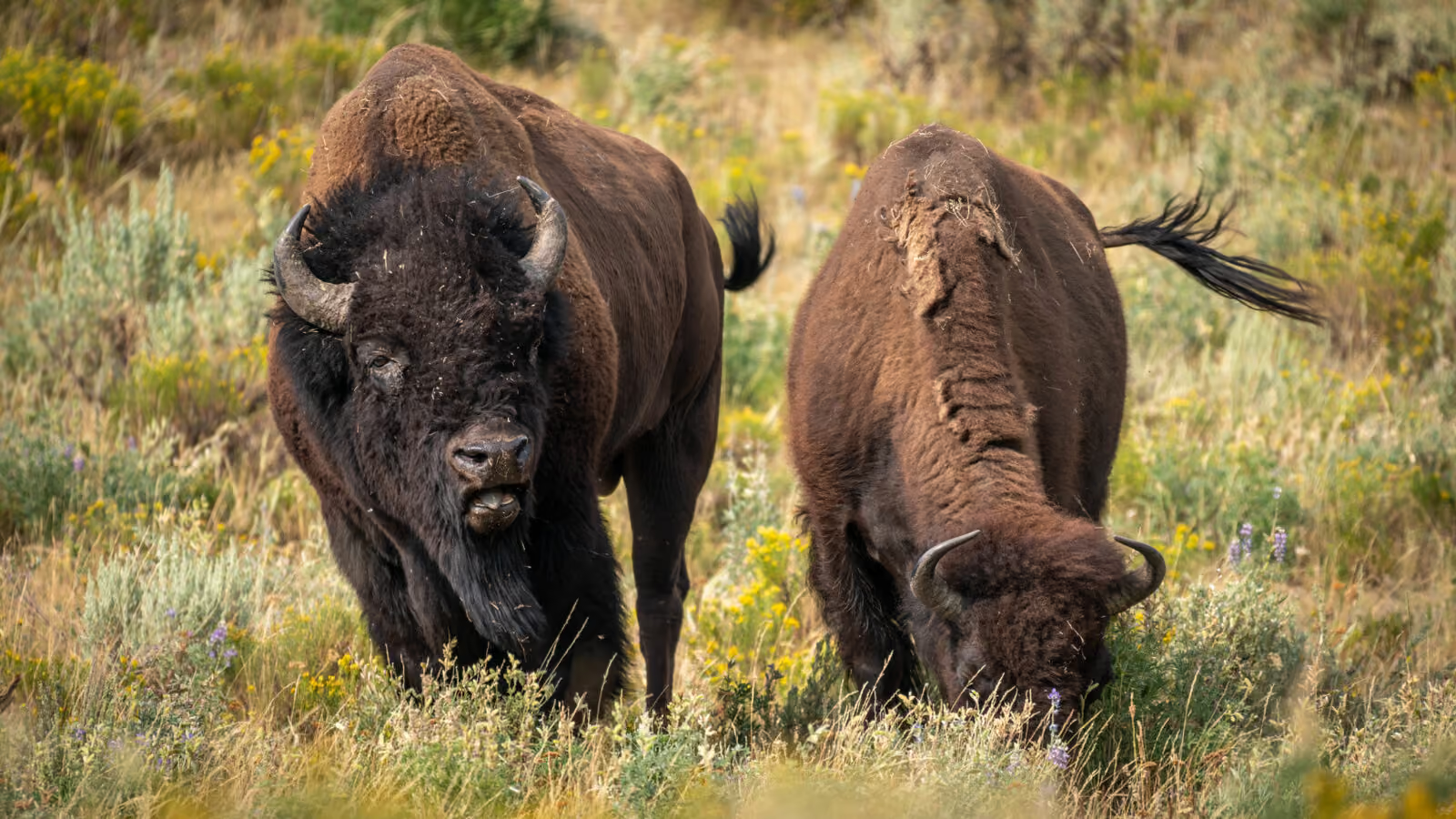
Bison and Elk Ruts: The bison breeding period, or rut, began in July and is drawing to a close. The elk rut begins near the end of August. Both bison and elk are polygynous breeders, meaning a small number of dominant males breed with multiple females. Males establish dominance through displays, vocalizations, and ritualized fighting that can result in serious injury. Bull elk maintain and defend breeding rights to harems of cow elk. Bull bison seek out and compete for breeding rights with individual cows as they become receptive. Visitors should give bison and elk plenty of space, particularly during the breeding season. Wildlife can become unpredictable when competing for mates.
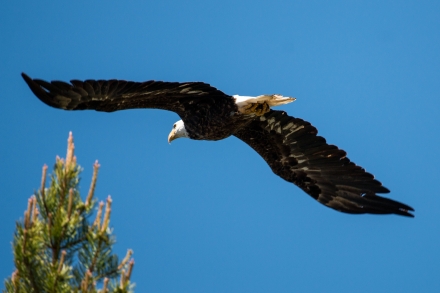
Bald Eagle young have fledged and are practicing their flying skills while continuing to beg their parents for food. Their dark juvenile plumage will gradually change to the iconic white head and tail as they mature. Bald eagles typically reach sexual maturity and develop adult plumage at about four to five years of age. Pairs nesting in the park this summer produced at least 15 eaglets, which is well above the park's average.
Trumpeter swan nesting success varied this summer, with a total of 6 cygnets hatching from two nest sites. One nest produced 5 of the cygnets, well above the park's average per successful nest.
Black and grizzly bears depend on berry crops at the close of summer. By the end of August, many berry crops, particularly huckleberries, have peaked, while others, including mountain ash, hawthorn, and chokecherry, are just beginning to ripen. This year’s huckleberry crop was noticeably poor, causing bears to roam more widely in search of other food. Chokecherries were less affected by the late frosts and will become increasingly important as bears enter hyperphagia, a period when they eat excessively to build fat reserves for winter. Mountain ash berries are distinctive in bear scat. Because the fruits contain little digestible biomass, they pass through a bear looking surprisingly like berry pie filling. Beginning in August and continuing through September, many bears seek out the seeds/nuts of whitebark pine. These seeds are rich in fats, carbohydrates, and protein, making them an important food source as bears build fat reserves for winter denning. Getting to the seeds can be challenging. Whitebark pinecones do not split open to scatter their seeds when they mature. Many bears seek out cones harvested and cached on the ground by red squirrels or Clark’s nutcrackers. Bears will also access cones by pulling down branches or by climbing the trees. Hikers should be especially alert for bears in whitebark pine habitat, generally found around 8,500 to 10,000 feet elevation in the Tetons.
Cold-water fish have been dealing with stressful water temperatures, particularly during afternoon hours. Prolonged exposure to water temperatures above 75°F can be fatal to trout, while brief exposures above 80°F can be lethal. Warm water also holds less oxygen, increasing stress for trout and other fish. Low oxygen and warm temperatures make it harder for fish to recover after being caught. Anglers can help reduce fish stress by avoiding fishing after 2 p.m. during periods of warm water. Cutthroat trout are feeding on aquatic macroinvertebrates as they build energy reserves for winter. Mountain whitefish and several non-native trout species are also building their energy reserve in preparation for their fall spawning period.
Summer is a wonderful time to observe wildlife as they feed, raise young, and prepare for seasonal changes. Give wildlife the space they need to forage and move undisturbed. Stay at least 25 yards from most wildlife and 100 yards for bears and wolves. Use binoculars or a telephoto lens to get a closer look without getting closer to the animal. Giving wildlife space helps protect both visitors and the animals that call Grand Teton home.
EXPLORE MORE STORIES:
.jpg)