October Wildlife Whereabouts: Changing Weather Brings Wildlife Viewing Opportunities
Shorter days and cooler nights prompt seasonal changes as Grand Teton’s wildlife prepare for winter. Many species have already begun migrating to warmer regions or lower elevations. However, mild autumn weather has allowed some animals to linger along their migration routes as they continue to forage.
Pronghorn: Most pronghorn migrate out of Jackson Hole to the Upper Green River Basin near Pinedale. In 2022, the local herd reached a high of around 700 animals, with nearly all leaving the valley for winter. The herd continues to recover slowly from the severe winter die-off of 2022–2023 with at least 122 animals counted last summer. As temperatures cool, small groups gather in the sagebrush flats around Blacktail Butte before following the historic Path of the Pronghorn through the Gros Ventre drainage.
Elk: Elk are gathering in the valley, and their movements will increase in November as temperatures drop and snow accumulates in the high country, pushing herds further along their migration paths to lower elevations and winter ranges.
Moose: Each fall, moose move locally in search of better forage. Many descend to lower elevations seeking areas where willows are abundant, while others remain at higher elevations through winter, feeding on spruce and fir. In the southern part of Grand Teton, moose may be spotted browsing in sagebrush areas, where bitterbrush and other shrubs provide important fall nutrition.
Mule Deer: Mule deer are moving toward their winter ranges. Deer that winter near Cody, along the North and South Forks of the Shoshone River, began migrating in early to mid-October. Those that winter near Dubois, Idaho, or Jackson, Wyoming, typically move later in October or in early November. Their tawny brown summer coats are transitioning to gray winter coats, a visible example of the seasonal coat changes that prepare ungulates for changing weather conditions.
Bears: Bear activity increased early this fall as grizzly and black bears entered hyperphagia, a period of intense feeding before winter dormancy. Grizzly bears continue to be sighted in the park’s northern areas as they forage for remaining natural foods. By late October, many bears begin entering their dens, with denning continuing into early December as snow deepens and food becomes harder to access. Visitors and residents can help keep bears wild by securing food and other attractants, properly disposing of garbage, and never leaving food unattended or accessible to wildlife.
Rough-legged Hawks: These long-distance migrants spend their summers on the Arctic tundra and typically arrive in Jackson Hole during November. Look for them perched on fence posts or other elevated vantage points as they scan open areas for prey.
Resident Birds: The woods have grown quieter as most migratory birds have departed for warmer regions. Year-round residents include gray jays, Clark’s nutcrackers, chickadees, ravens, great horned owls, bald eagles, pine grosbeaks, goldeneyes, and trumpeter swans.
Bats: Six bat species are common in the valley, including little brown, big brown, hoary, silver haired, long-legged, and long-eared bats. Bat activity plummets by mid-September; although smaller numbers of long-legged and silver-haired bats still remain through October.
Fish: Native mountain whitefish are beginning to spawn in many park lakes and streams. Fall spawning among nonnative brook, brown, and lake trout is nearly complete. As stream and river levels drop to winter lows, larger fish move to deeper pools or downstream reaches to spend the winter.
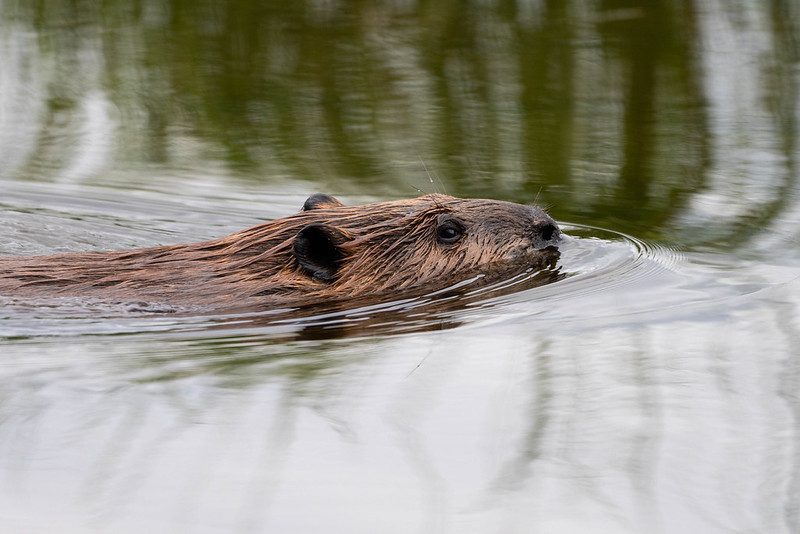
Beaver: All fall, beaver work to prepare for winter by cutting branches and sticks and caching them underwater in the mud at the bottom of their ponds. They retrieve this stored food beneath the ice, carrying it through underwater passageways to eat inside their lodges. Beaver also reinforce their lodges with a thick layer of sticks and mud that hardens like cement, providing insulation and protecting the occupants from most predators.
Wildlife watching in October can be especially rewarding as animals congregate or move through lower elevations. Give wildlife plenty of space and watch for signs that you are too close. If an animal changes its behavior, stops feeding, or moves away, back up and increase your distance. When driving on roads in and around the park, slow down, stay alert, and watch for wildlife crossing, especially at night and in low-light conditions.
EXPLORE MORE STORIES: