.avif)

April Wildlife Whereabouts: Spring Transitions
As temperatures warm and the valley continues to melt out, exposed vegetation greens up and new plants sprout. This fresh growth provides essential nutrition, helping Grand Teton National Park’s animals replenish energy reserves lost during winter.
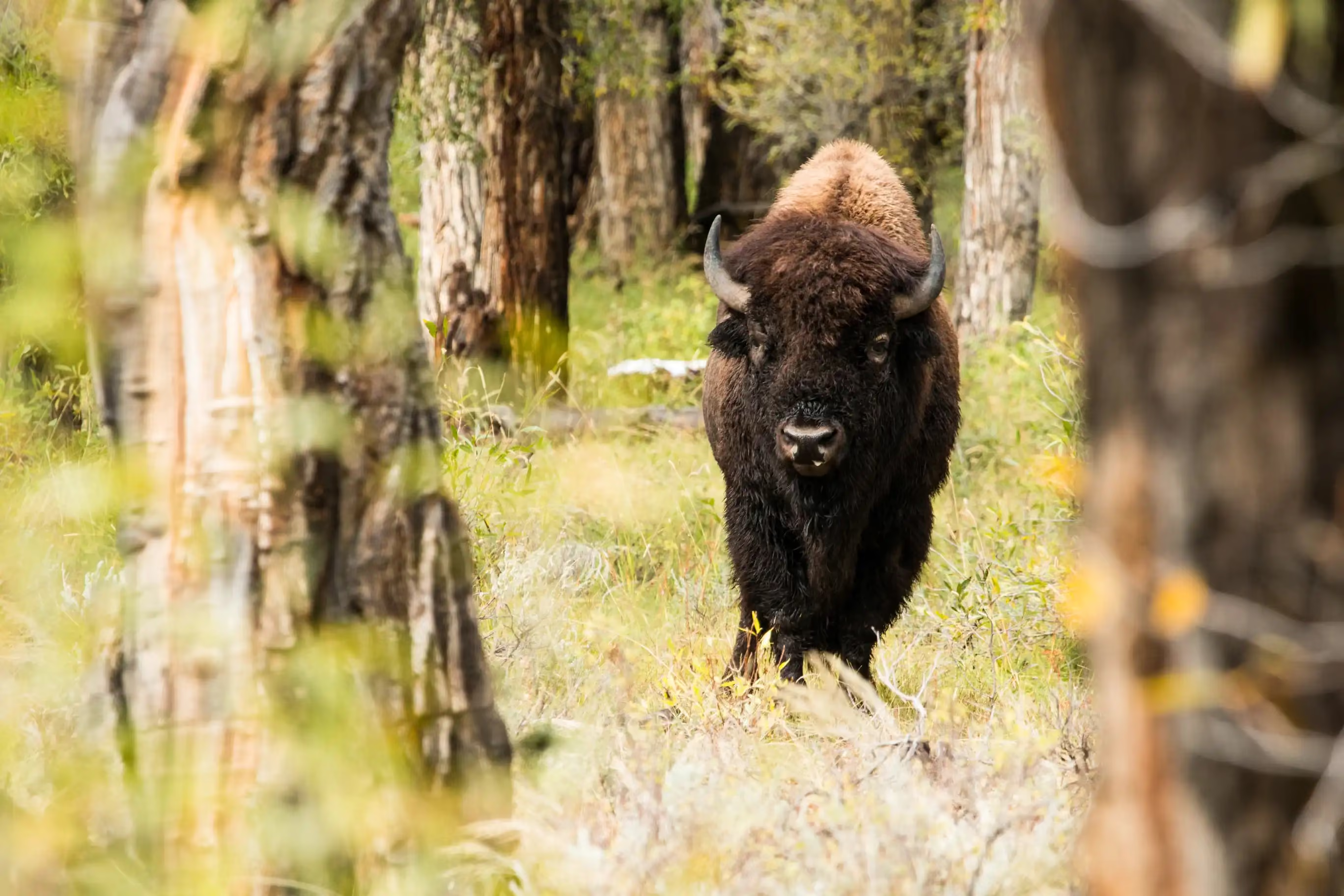
Ungulates are taking advantage of the early spring melt to move toward their summer ranges. Spring vegetation is especially vital for pregnant animals, whose nutritional needs increase as they prepare to give birth in the coming months. Gestation periods in mammals remain very consistent regardless of weather. The first bison calves were born in early April, while moose and elk calves arrive in May.
Elk are migrating north from the National Elk Refuge into the park, following the retreating snowline along riverbanks and sunlit east-facing slopes where green plants sprout first. Early migration routes often follow the Snake River corridor just north of Moose.
Bighorn sheep in the Teton Range move in early spring from high-elevation winter ranges down to mid-elevations to access newly emerging, nutrient-rich vegetation.
Early nesters like bald eagles and great horned owls are already sitting on their nests, while ravens, golden eagles, and Canada geese are actively courting and breeding.
Migratory birds are arriving daily. Western bluebirds, red-winged blackbirds, meadowlarks, osprey, red-tailed hawks, northern flickers, and robins are returning to the valley. The first sandhill cranes have also returned, strengthening their pair bonds through calls and courtship dances.
Sage grouse are gathering at lek (mating) sites, where males perform courtship displays to attract females. Activity is expected to peak in late April or early May.
Snowshoe hares and long-tailed weasels will soon begin their seasonal transition, shedding white winter coats for brown summer camouflage as the snow disappears.
Bears are emerging in increasing numbers and actively foraging after months of hibernation. They seek out winter-killed carcasses, leftover berries, pine seeds, and early vegetation. Carry bear spray and remain alert while traveling in the ecosystem.
Wolves, coyotes, and foxes are concentrating activity near den sites as they care for newborn pups and kits. Hunting ranges become more localized during this time.
Beaver activity is ramping up as ice melts from ponds and waterways. Spring marks the start of their breeding season. Beavers mate for life, forming strong pair bonds. Litters of two to four kits are born between April and July, and family groups often include young from previous years. After 2–3 years, young adults disperse to establish new territories, build lodges, and find mates. In spring, beavers work continuously to maintain dams and forage for newly sprouted plants and fresh tree bark.
Moose may appear ragged or “ghost-like” due to winter tick infestations. These ticks latch onto moose by the thousands in the fall and feed for months. The moose’s attempts to remove them result in patches of broken hair or bare skin. Severe infestations can weaken moose and may be fatal, especially for young animals.
Although spring brings renewal, wildlife is still recovering from winter. Fat reserves are low, and food sources are just beginning to emerge. Energy conservation remains critical. Please observe animals from a distance and avoid disturbing them while they forage.

EXPLORE MORE STORIES:
.jpg)